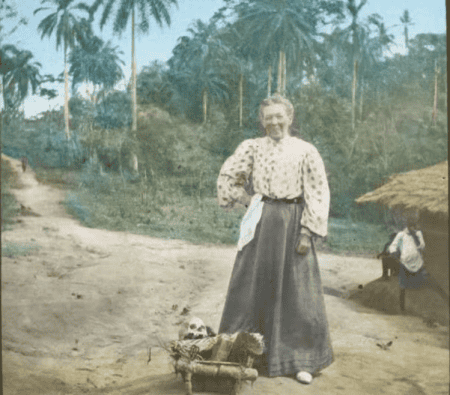
In a dark rain forest in what is now Nigeria, a young African mother placed two large clay pots under a tree. Any observer from Europe might have imagined that she was collecting food for her family. But there was a darker purpose! The mother placed a newborn baby into one pot. Then, she placed a second child down into the other pot. The babies were twins, born only hours earlier. Having deposited them in the pots, the mother turned and walked back toward her native village. Leopards and many other wild beasts prowled the jungle. Why had the mother left her babies there? Was it to protect them like Moses? No. It was the opposite. The twin babies had been left in the jungle to die. Whether a quick death by leopards or a slow death by starvation, it mattered not. The babies had no hope for life. Among the Efik people of the Calabar region of what is now Nigeria, there was a strange superstition that twins were the result of the mother’s union with a demi-god of pagan witchcraft. They believed that one baby was a “devil child.” Since there was no way of knowing which baby was human and which was demonic, the custom was that both babies would die by exposure.
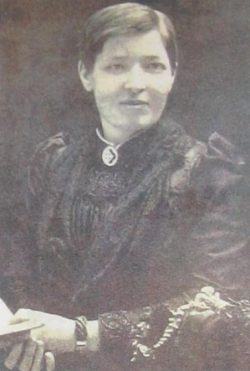
A young Scottish girl named Mary Mitchell Slessor was totally unaware of this barbaric custom when she volunteered to go to the largely unknown continent of Africa as a missionary. Mary was born on December 2, 1848, in Aberdeen, Scotland. Her parents, Robert and Mary Slessor, were of the lower strata of society. Mary’s father was a shoemaker. Her mother was a weaver. When Mary was eleven years old, the Slessor family moved to Dundee. Sadly, Mary’s father was addicted to alcohol. He died of pneumonia. The Slessor family lived in poverty. By the time that Mary was fourteen years old, she was working in a jute mill for twelve hours a day.
In spite of all these hardships, Mrs. Slessor kept her faith in God strong. She was a humble and earnest Christian and subscribed to a Presbyterian monthly magazine called the Missionary Record. Mary Slessor grew up following with great interest the explorations of Dr. David Livingstone in the jungles and savannahs of Africa. She was deeply interested in the progress of the Gospel in Africa. Two of Mary’s siblings, Robert and John, hoped to become missionaries one day. Both died before they could ever go to the field. As Mary read missionary books and articles, and prayed for the benighted souls in foreign lands, she wondered if she, a young girl, could ever venture to the dangerous lands where only the bold and brave could go.
As Mary reached her young twenties, she began working with girls and boys in the slums of Dundee, inviting them to services where they would hear the Gospel. She visited their homes, drank tea from dirty dishes, and shared with poor children the stories of Jesus and His love for sinners. She still spent twelve hours a day working in the textile mills, but she gave all the time that she could obeying the command of her Lord to serve and love others, doing to them as she might desire them to do unto her. One day in 1874, when Mary was twenty-six years old, the newspapers announced that the famous Scottish missionary, David Livinstone, had died on his knees in a remote part of Africa. Inspired by Livingstone’s life and testimony, Mary Slessor resolved that she would go to Africa and follow his example.
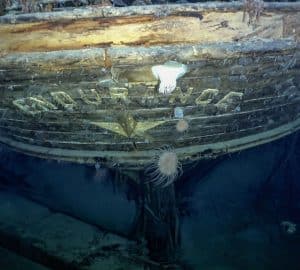
Mary set sail in 1878 on board the SS Ethiopia for West Africa. The young missionary woman was given an assignment by the mission leaders in the Calabar region to work among a superstitious and little-understood people group know as the Efik. Like many new missionaries, she was initially charmed by the exotic food, the new language, the delicious tropical fruits, the brilliant birds, and the exciting sights and sounds of a foreign land. But soon, darker realities set in.
Mary Slessor learned that the word “Efik” means “oppressors” and they were given this name because of their cruel and bloody ways. Suspected criminals were forced to drink poison to determine guilt. Twins were left outside to die because of the superstition that one of the two babies was a “devil child.” Witchcraft practiced by demon-possessed witchdoctors held the people in bondage to Satan and his devilish ways. Chiefs took many wives, and upon his death a wife was selected to die with the departed chief. Mary moved into a native hut and lived with the people. Some feared that the African chiefs would kill her, but she lived on and gradually earned the trust of the tribal people by her selfless deeds of kindness. She ate their food, played with their children, shared in the work, slept on beds full of insects, and never complained.
Malaria drove Mary Slessor back to Scotland to recuperate her strength. She told the stories of what she had seen in Africa, inspiring other young people to go to Africa also! Upon recovery of her health, she returned to the Efik people that she had come to love. Mary Slessor became an expert linguist, and could speak the native language as well as any villager. She loved her people, and they came to love her. Slowly, they began to give up their pagan ways, renounced witchcraft, and bowed to the authority of Jesus Christ.
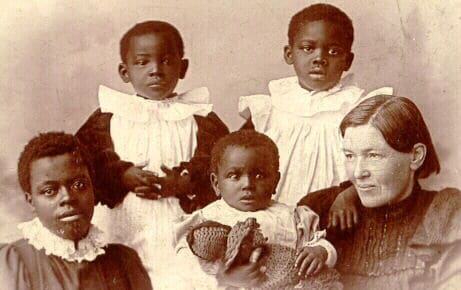
Mary Slessor rescued many of the abandoned African twins, and raised them to successful adulthood. She founded a vocational school to teach practical skills to the native African people, a school called the Hope Waddell Training Institute, which still exists to this day! On one occasion when Mary Slessor rescued an abandoned pair of twins, a boy and a girl, the boy was already past the point of recovery. Mary took in the surviving girl and raised her as her own daughter. She called her Janie, and the little African girl had the opportunity to visit Scotland for a visit with her new “Mother.” Mary eventually adopted three other children in addition to Janie.
In 1888, Mary Slessor expanded her work northward to Okoyong. Missionaries had been killed by the savage natives of the area, but Mary Slessor went there without fear. Like her Lord Jesus she sought to do good to those who cursed her. Her life of loving service to the people broke down animosity and suspicion, and she earned the trust of the people.
Throughout her ministry in Africa, Mary Slessor suffered long and dangerous consequences from the malaria that she had initially contracted upon her arrival in Africa. Eventually, she could no longer walk over the slippery and muddy trails. African tribal people willingly pushed their “mother” from village to village as she went about doing good. Recognizing the wonderful things that she had sacrificially done for the people of Africa, the King of England conferred upon her the honor of the Silver Cross in the Order of the Hospital of St. John of Jerusalem in 1913.
When Mary Slessor was sixty-six years old, she suffered another return of the debilitating malarial fevers. Friends hoped she would recover, but she sank into unconsciousness in the grips of a high fever. Her last spoken words were a prayer in the Efik language: “O Abasi, sana mi yok,” O God, release me.” As a rooster crowed at the crack of dawn of January 13, 1915. Janie was at the side of her beloved “mother.” One of her African attendants said, “Day must be dawning.” It was. For Mary Slessor, who the people of Africa called “Everybody’s Mother” it was the dawn of her eternal day that would know no night.
Bibliography
Mary Slessor: Heroine of Calabar by Basil Miller